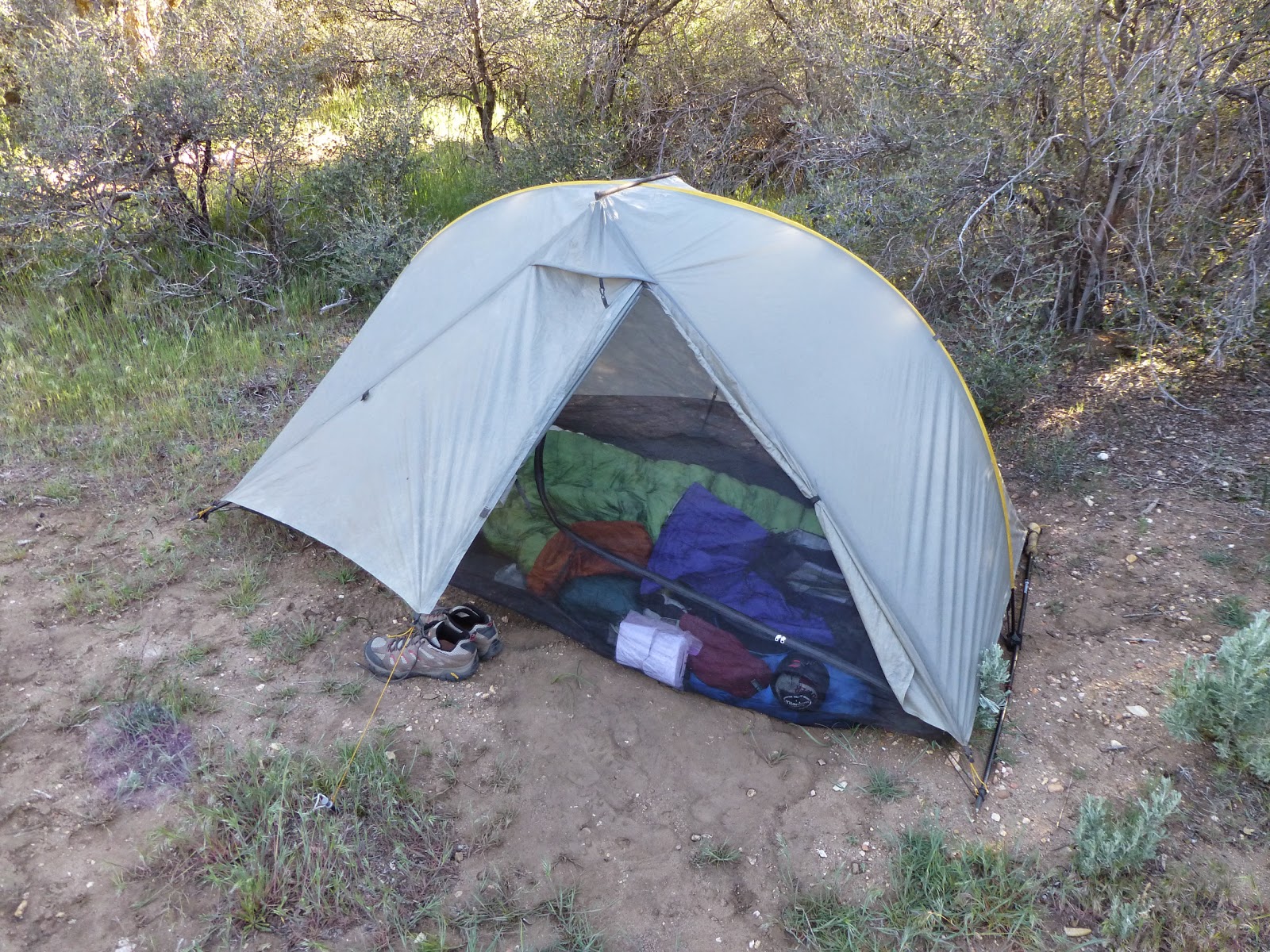
(My complete gear list)
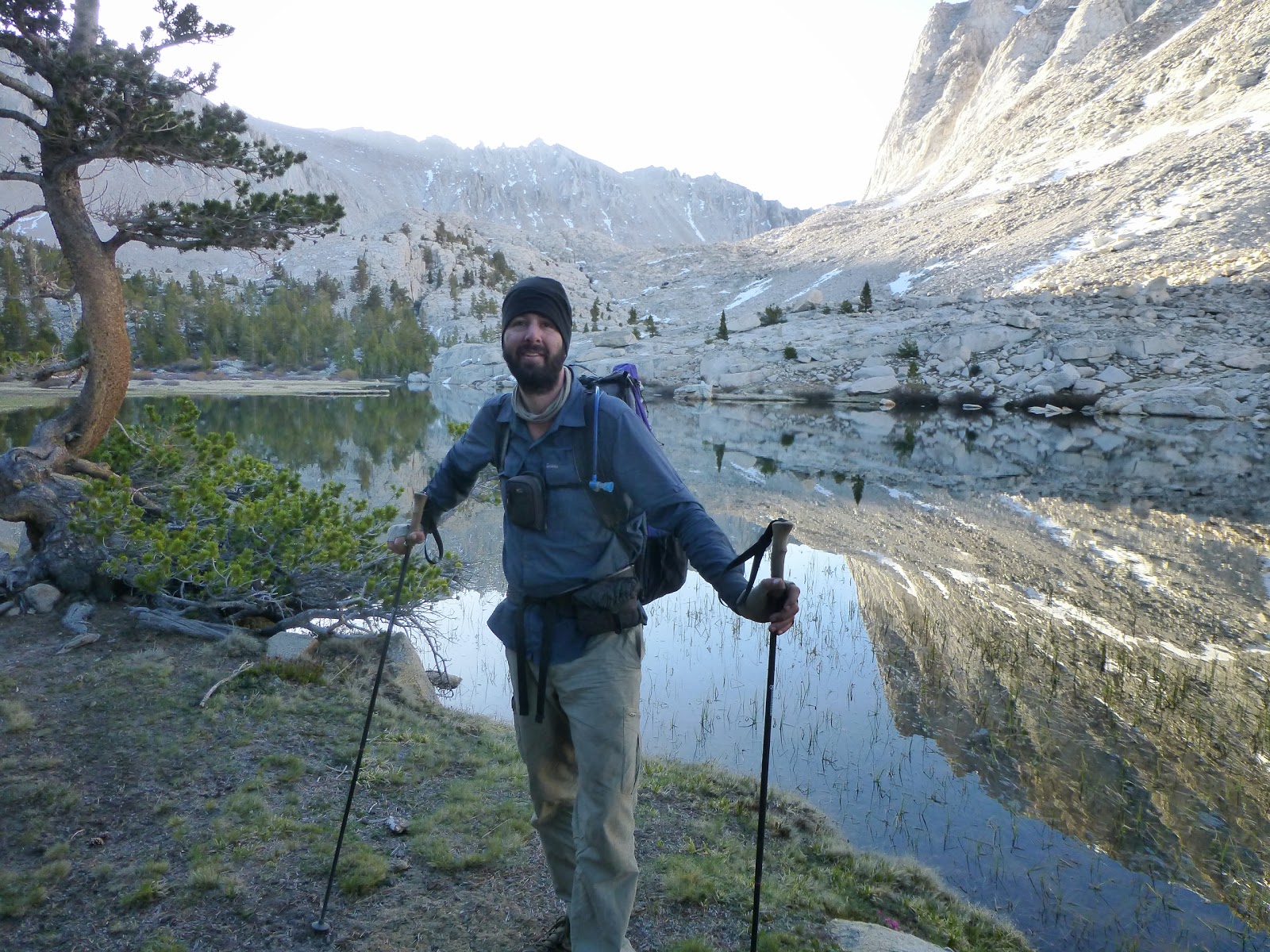
The biggest problem I had with the poles was theie locking mechanism. It seems simple enough, and it almost never
failed on me while hiking, but whenever I wanted to adjust the length (every evening at camp, to extend them so that
my tent would be wide enough, and every morning, to retract them back to hiking length), I had to fight with the
mechanism, twisting and turning, pushing and pulling. It was a real pain in the ass, and I finally gave up and
ordered 4 tent stakes, so I could set up my tent without fiddling with the poles. That solved that problem, but it
was still annoying.
Another problem I had with them - the tips are wearing down really fast. I contacted GG support when I was in Lake Isabella (Mile 561) and ordered tips to Lone Pine (Mile 788), where I replaced one tip. I replaced a second tip in Quincy (Mile 1269), and another in Ashland (Mile 1726). All the while, Idan was still using the original tips he used from the start, and they were just starting to show some wear.
Coming out of Lone Pine, I managed to snap one pole's lower section while post holing. Admittedly, while stumbling through the snow I stepped on the pole. But it did snap easily. I had to order a replacement to Mammoth Lakes (Mile 906). Coming out of Ashland, I just had a little stumble over a root on the trail (I didn't even fall to the ground), and again I snapped a pole. I was thinking of buying another section (GG offer no warranty on the poles), but then I snapped the second pole on the following day (This time I did end up flat on the ground). Luckily - I had one snapped lower section, and one snapped upper section. So together I still had a full pole to carry me all the way to Cascade Locks (Mile 2155). Coming down into Cascade Locks on the Eagle Creek (steep) alternate, I finally snapped my pole again. No GG poles for me in Washington!
I left the one intact pole section I still had at the Cascade Locks Post Office (I hope someone found it useful),
and bought a pair of cheap and heavy Leki Quantum poles. It took me a long while to get used to the weight
difference, and I never quite liked them. But they did the trick for the remaining 520 miles of trail. And they were
also very easy to extend and retract, so I even used them for my tent for a couple of nights.
Next time I'll just buy a pair of Black Diamond carbon fiber poles, like Idan had. They seemed light enough, but much sturdier than my GG.
But, my plans had to change - because of the drought in California there were many rumors about which camp stove is permitted on the trail. There were some people claiming that alcohol stove is still legal, but I figured I'll give gas stoves a try.
I found the LiteMax at a sale in Sierra Trading Post for ~$37, so I grabbed it. Idan had an identical stove, and pretty quickly we figured out we can boil enough water for both of us on a single stove every evening, so we just carried one of them until we split up. The stove worked very well, and got the water to a boil fast enough for me. Though seeing other people using JetBoil I admit they were much faster. As I said - it was never an issue for me.
I was planning to switch to my alcohol stove when I enter Oregon, but when I got there I decided I'd stick with what worked out so well for me. So I used the LiteMax for the entire trail.
At the end, several of the tiny screws were a bit loose (one was missing). An email to SnowPeak, and they just sent me a small envelope with brand new little screws. That's all I needed. Good customer service!
The pot can easily fit a small gas canister, including my LiteMax stove and a small lighter. It held enough water
for me to boil for lunch. I guess that's all I need in a pot. I never cooked in it (Except for instant mashed
potatoes, if you call that cooking, once or twice), so I also never had to clean it. It did the trick.
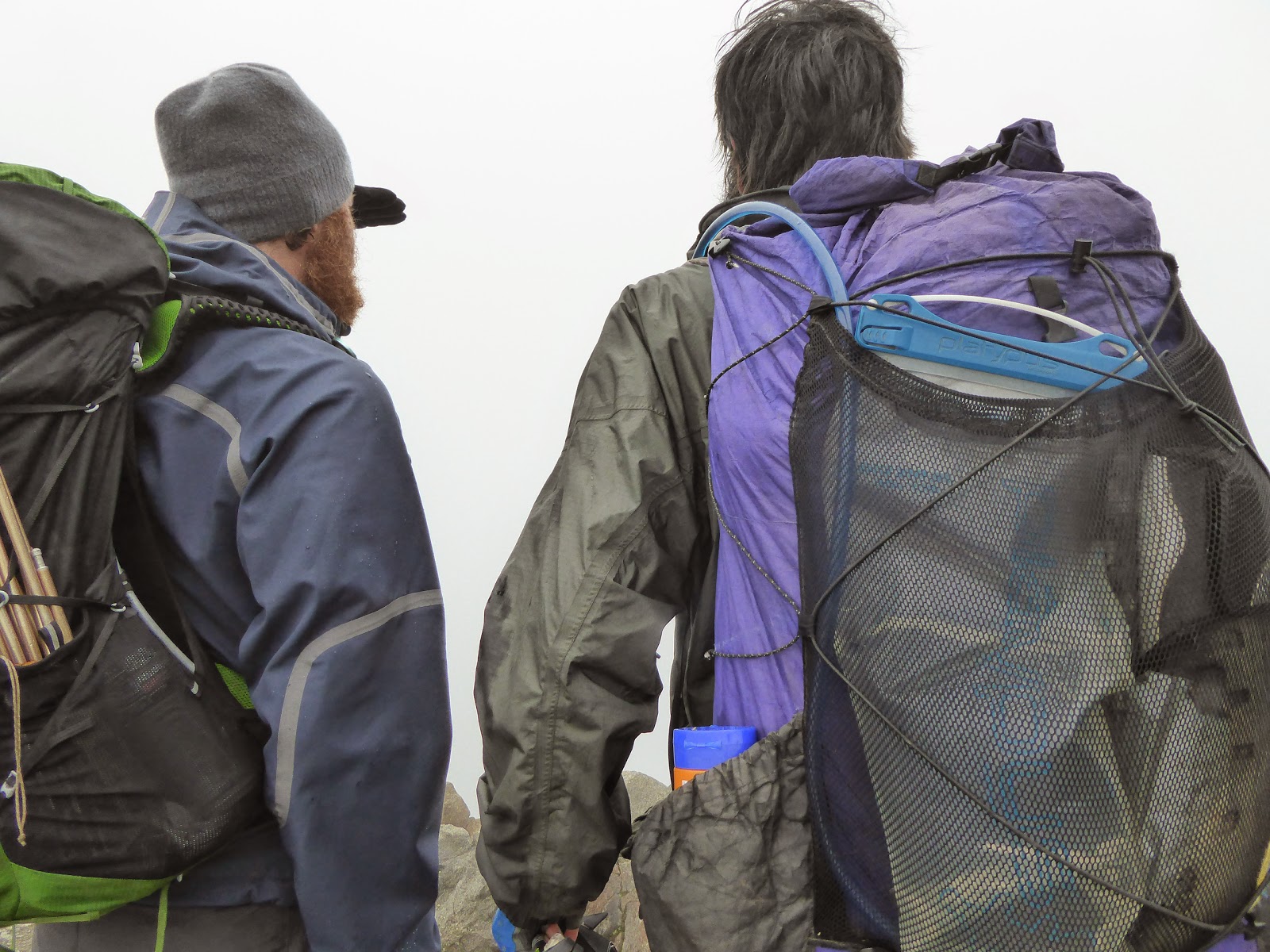
I carried the platypus inside my backpack, using the hydration port to pull out the hose, but in the Sierras I had my bear canister taking up too much space inside, so I moved the water bag to the outside mesh pocket. It was much more comfortable for me there, so I kept on carrying it on the outside from that point on.
I had the bag freeze on me once in the Sierras, at the morning before climbing up Whitney. It wasn't that bad - the ice thawed quickly enough, and the most annoying bit was the frozen hose, but the biggest issue was that it caused a small tear in the bag, and it was leaking slightly all the way to Lone Pine (about 3 more days). In Lone Pine I tried replacing the bag, but I couldn't get in touch with Cascade Designs in office hours, so I ended up putting a Compeed sticker over the tiny hole, and it held out fantastically all the way to Canada.
I bought two 1 Liter Smart Water bottles down in San Diego, right before starting the trail. I chose Smart Water because I heard the bottles last long, and they fit my Sawyer Mini filter. I used them all the way to Tehachapi, where I replaced one bottle with a 1.5 Liter bottle. A bit later I ditched that one also, and from the Sierras I only carried one 1 Liter bottle on me (along with the 3 Liter Platypus).
The bottle held out very well, and I actually carried the same one all the way to Canada. I still had a hard time finally throwing it to the bottle recycling bin back home in Tel Aviv, a few weeks after I got back home. But that was just me being overly attached to my gear. While the threads did get a bit dirty, and needed the occasional cleaning in hotel rooms along the way, the rest of the bottle was in perfect shape and didn't leak or burst. I was very happy with it.
Quickly enough I lost one of the rubber bands that should keep the filter from dripping from around the threads, so I had to squeeze the bottle and make sure the drops don't get into the "clean water" reservoir.
A bit later, we started using Aqua Mira to clean our waters as an extra step after filtering them. It was just before entering the Sierras, and Idan insisted that the water there might be a boot polluted, and filtering might not be enough. After about two days of this dual-filtering, I just gave up and started just using the chemical treatment, and not filtering at all - most water sources seemed so good, I didn't feel any need for further filtering.
As the hike went on, and I got complacent, I slowly started skipping the purifying bit on more and more water sources, until I also ditched the Aqua Mira drops completely. I just drank all the water directly, and never had any problems. I can not recommend this method at all to anyone else. It is probably the most stupid path to chose. But it worked for me.
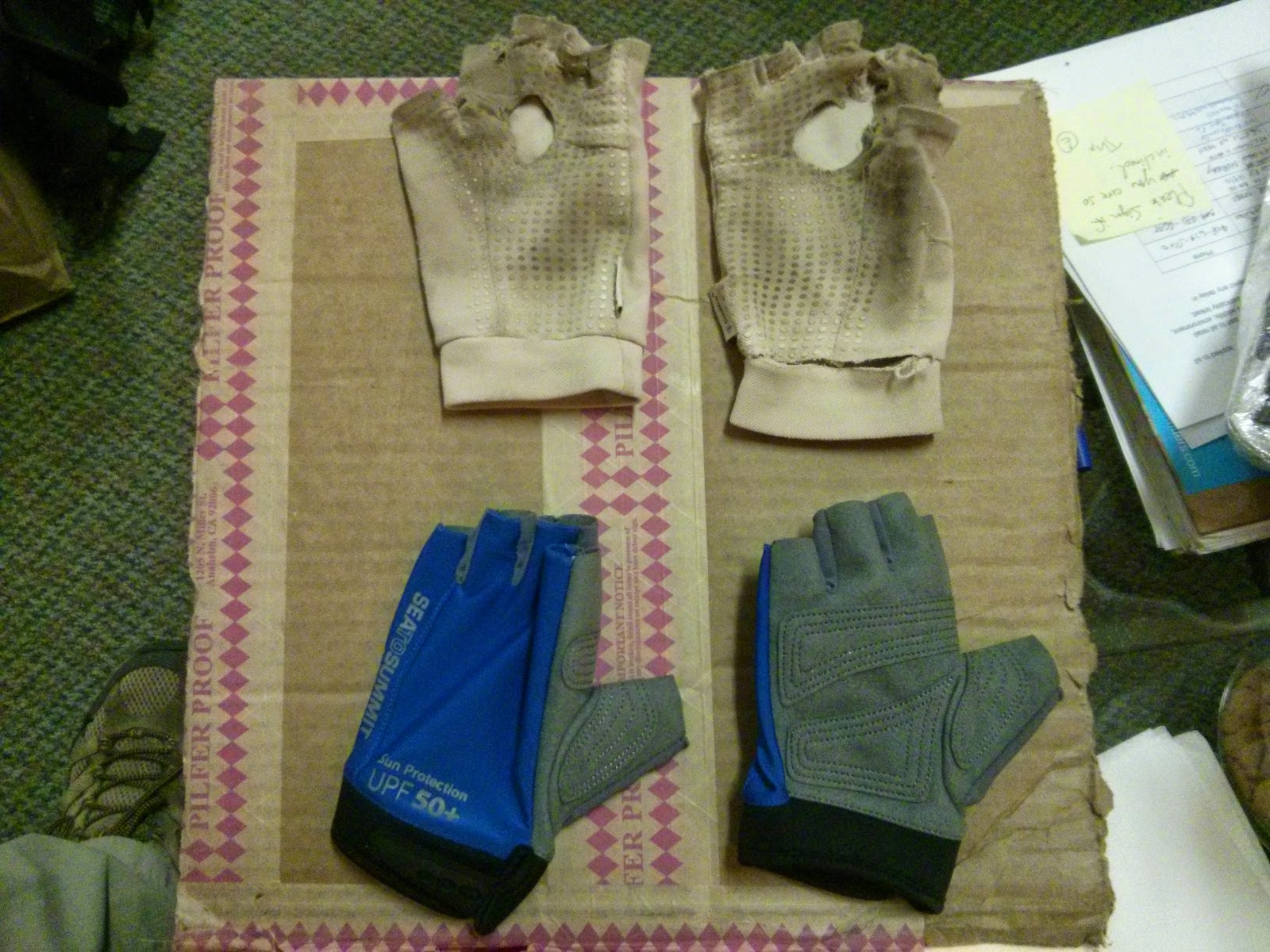
In Lake of the Sky Outfitters I bought a new
pair of sun gloves, this time going for the Sea to Summit pair. I didn't like that pair as much, especially the hard
leather bit on the palm side, which was not comfortable, and a bit too hot sometimes. They were also a bit harder to
take off. I recently found out it's made out of fake leather, which is a comfort. They did hold up nicely all the
way to the end, and worked well in protecting my hands from the sun.
Only in the two long sections of the Sierras (each one was 7 days between towns/electricity) we really had to use the panels. After I realized I am carrying it on my back and never actually using it, I sent it away, and kept on relying on the external battery.
Sadly, the battery I got in Etna had the exact same problem - LEDs going down 4->3->0. I just went into Amazon, and ordered an Anker battery. It's a brand and model I saw other hikers use, and it was smell and lightweight enough for my tastes.
The Anker worked perfectly. Helping me keep my phone with enough power for 4-5 days between towns, and that's on top of an old phone, with crummy battery. So I was happy.
I also really liked the X20 zoom I had, which allowed me to take nice photos of distant mountain tops (I rarely used the full X20, but it did give plenty of room to play with). I never really played with the different camera options, just shooting on "auto" all the time.
The camera got a bit wet right after the half way point near Chester, and stopped working. I sent it to some lab from Mt. Shasta, but they sent me a repair quote of ~$160, so I told them to just send the camera to my home base, and later just bought a newer camera from B&H, to Ashland. One side effect is that I don't have many good photos of Northern California. Oh well.
The new camera was just a more updated model. Same GPS functionality, but this one also has Wi-Fi. The Wi-Fi option is a bit sketchy - you can't transfer more than 10 photos to your phone at a time, so whenever I reached town, I'd copy them in small batches. It was annoying, but at least it was much easier than before. Now that I'm home, I tried setting up auto transfer from the camera to my home computer, I still couldn't get it to work. It's very buggy and not well documented.
But the camera itself does feel a bit better than the previous model. Now with X30 zoom, there's even a bit more zoom to play with. I still shoot on "auto", and I am happy with the results.
Pretty soon I discovered that I didn't have a lot of reception on the trail, especially compared to AT&T reception. I decided to switch to Straight Talk, an MVO that operates over AT&T network and offers a prepaid monthly option as well. for $45 I Got unlimited national minutes, and 3GB of data. I also used Google Voice to call home (international), so having national only minutes didn't bother me. The reception was all right throught most of the first half of the trail. Up in Oregon I had a bit less, and almost no reception in Washington. Verizon has much better reception up there, but they are not compatible with my Israeli phone, so they were not an option for me.
I used many different Android apps on the trail, on which I'll elaborate further in a future post. But having a smart phone was definitely a good call for me. It was very handy and useful, and I'd highly recommend it.
Trekking Poles - Gossamer Gear LT4s/Leki Quantum
I started my hike with a pair of Gossamer Gear LT4s trekking poles. They are made of carbon fiber, and are very light indeed. I was worried that the lack of shock absorbing will bother me, but I quickly got used to them, and they've been very useful on the trail.
|
| They did work, for a good 2/3 of the trail |
Another problem I had with them - the tips are wearing down really fast. I contacted GG support when I was in Lake Isabella (Mile 561) and ordered tips to Lone Pine (Mile 788), where I replaced one tip. I replaced a second tip in Quincy (Mile 1269), and another in Ashland (Mile 1726). All the while, Idan was still using the original tips he used from the start, and they were just starting to show some wear.
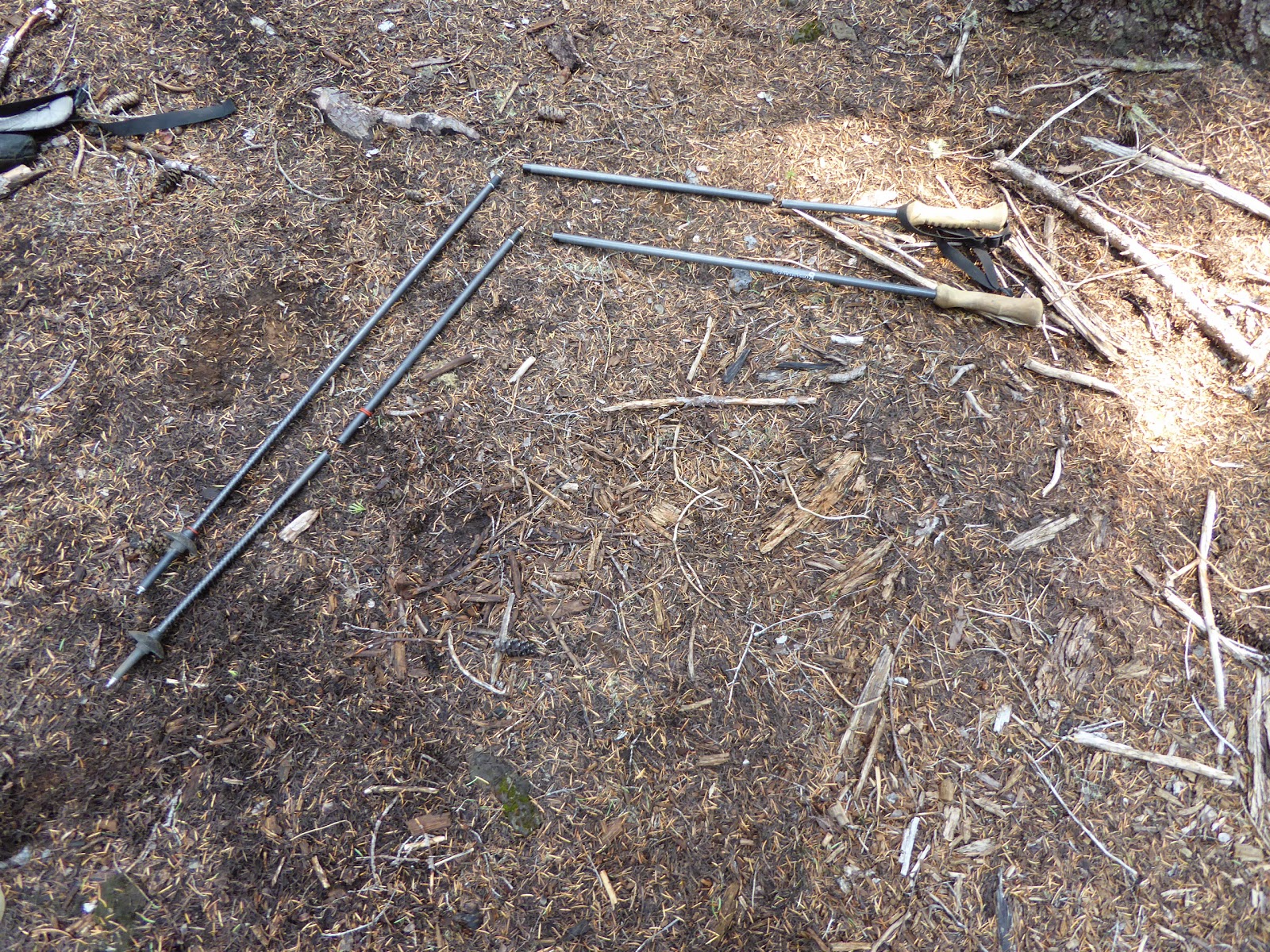
Coming out of Lone Pine, I managed to snap one pole's lower section while post holing. Admittedly, while stumbling through the snow I stepped on the pole. But it did snap easily. I had to order a replacement to Mammoth Lakes (Mile 906). Coming out of Ashland, I just had a little stumble over a root on the trail (I didn't even fall to the ground), and again I snapped a pole. I was thinking of buying another section (GG offer no warranty on the poles), but then I snapped the second pole on the following day (This time I did end up flat on the ground). Luckily - I had one snapped lower section, and one snapped upper section. So together I still had a full pole to carry me all the way to Cascade Locks (Mile 2155). Coming down into Cascade Locks on the Eagle Creek (steep) alternate, I finally snapped my pole again. No GG poles for me in Washington!
|
| But then they snapped. Notice two broken sections, out of the four. |
Next time I'll just buy a pair of Black Diamond carbon fiber poles, like Idan had. They seemed light enough, but much sturdier than my GG.
Stove - SnowPeak Titanium LiteMax
A long time ago I bought a Caldera F-Keg system, and used it for short trips in Israel, and for my Israeli National Trail attempt. I really liked it simplicity, and I enjoyed cooking on alcohol. I never cared much for the time it takes to boil water. I don't mind waiting a few more minutes.But, my plans had to change - because of the drought in California there were many rumors about which camp stove is permitted on the trail. There were some people claiming that alcohol stove is still legal, but I figured I'll give gas stoves a try.
I found the LiteMax at a sale in Sierra Trading Post for ~$37, so I grabbed it. Idan had an identical stove, and pretty quickly we figured out we can boil enough water for both of us on a single stove every evening, so we just carried one of them until we split up. The stove worked very well, and got the water to a boil fast enough for me. Though seeing other people using JetBoil I admit they were much faster. As I said - it was never an issue for me.
I was planning to switch to my alcohol stove when I enter Oregon, but when I got there I decided I'd stick with what worked out so well for me. So I used the LiteMax for the entire trail.
At the end, several of the tiny screws were a bit loose (one was missing). An email to SnowPeak, and they just sent me a small envelope with brand new little screws. That's all I needed. Good customer service!
Pot - Evernew Ultra-Light 0.75Liter
Even though I ordered the 0.75l Pasta Pot (or is it 0.7l? I'm not sure) from Trail Designs, I got the 0.6l Pot instead. I was afraid it won't be enough for me, and Trail Designs replaced it for me without a problem. In retrospect, I think the 0.6l one would have been enough as well.
|
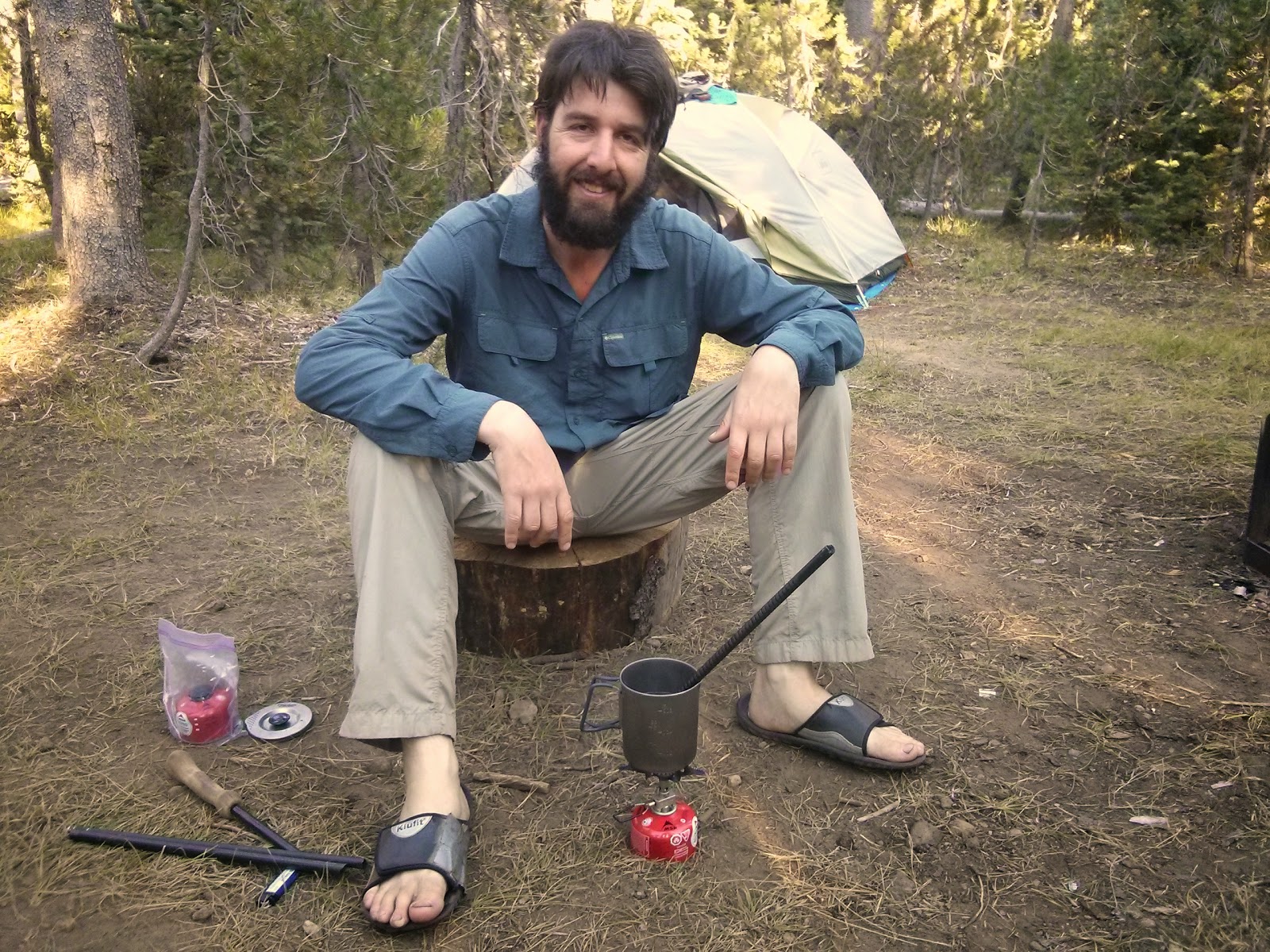
| Stove + Pot + broken GG poles. The best method to get the tips off. |
Spork - Sea to Summit Alpha Light long spoon
I have a couple of Light My Fire sporks back home, but the first thing I noticed when I landed in San Diego was that I forgot them behind. So I bought a long spoon at REI. I was very happy with it being a bit extra long than normal sporks/spoons, as it allowed me to easily eat directly out of the Knorr bag I was having for lunch that day. It was also nice having a flat ending, to easily scrape the bottom of the meal. I never felt like I needed a fork or a spork instead.Hydration - Platypus Big Zip 3L/Smart Water bottles
I have the older model of the Big Zip (without that Low Profile thingie), but I really enjoyed it on the trail. I find drinking from a tube much easier than having to pull out a water bottle, and put it back in the side pocket afterwards.I carried the platypus inside my backpack, using the hydration port to pull out the hose, but in the Sierras I had my bear canister taking up too much space inside, so I moved the water bag to the outside mesh pocket. It was much more comfortable for me there, so I kept on carrying it on the outside from that point on.
I had the bag freeze on me once in the Sierras, at the morning before climbing up Whitney. It wasn't that bad - the ice thawed quickly enough, and the most annoying bit was the frozen hose, but the biggest issue was that it caused a small tear in the bag, and it was leaking slightly all the way to Lone Pine (about 3 more days). In Lone Pine I tried replacing the bag, but I couldn't get in touch with Cascade Designs in office hours, so I ended up putting a Compeed sticker over the tiny hole, and it held out fantastically all the way to Canada.
I bought two 1 Liter Smart Water bottles down in San Diego, right before starting the trail. I chose Smart Water because I heard the bottles last long, and they fit my Sawyer Mini filter. I used them all the way to Tehachapi, where I replaced one bottle with a 1.5 Liter bottle. A bit later I ditched that one also, and from the Sierras I only carried one 1 Liter bottle on me (along with the 3 Liter Platypus).
The bottle held out very well, and I actually carried the same one all the way to Canada. I still had a hard time finally throwing it to the bottle recycling bin back home in Tel Aviv, a few weeks after I got back home. But that was just me being overly attached to my gear. While the threads did get a bit dirty, and needed the occasional cleaning in hotel rooms along the way, the rest of the bottle was in perfect shape and didn't leak or burst. I was very happy with it.
Water Filter - Sawyer Mini/Aqua Mira
I bought the Sawyer Mini filter right before starting the trail, hearing many good things about it. I really liked its compact design and weight. I never used the little hose, and the packaged 16oz squeeze bag was also very unhelpful. It's almost impossible to fill the bag up from a stream, and I found it much simpler to just fill up one Smart Water bottle and squeeze it into another one.Quickly enough I lost one of the rubber bands that should keep the filter from dripping from around the threads, so I had to squeeze the bottle and make sure the drops don't get into the "clean water" reservoir.
A bit later, we started using Aqua Mira to clean our waters as an extra step after filtering them. It was just before entering the Sierras, and Idan insisted that the water there might be a boot polluted, and filtering might not be enough. After about two days of this dual-filtering, I just gave up and started just using the chemical treatment, and not filtering at all - most water sources seemed so good, I didn't feel any need for further filtering.
As the hike went on, and I got complacent, I slowly started skipping the purifying bit on more and more water sources, until I also ditched the Aqua Mira drops completely. I just drank all the water directly, and never had any problems. I can not recommend this method at all to anyone else. It is probably the most stupid path to chose. But it worked for me.
Gloves - some unknown brand/Sea to Summit Eclipse Paddling Gloves
On my third day out, I bought a pair of sun gloves at Dave Super's gear store in Mt. Laguna. I just bought the cheaper brand gloves over there, but I really liked them. They were light and airy, with an actual hole at the palm of my hand, and cut-off fingers. They were very comfortable, and lasted almost half way up to South Lake Tahoe (mile 1093).
|
| Old vs. New |
Camp Shoes - cheap flip flops
I just carried a pair of cheap, simple, flip flops I had for hiking for several years. The right flip tore up right after leaving Tahoe, but I managed to carry it all the way, with the help of some duct tape emergency field repair. It worked. I actually carried them back home to Israel, and threw them to the trash bin next to my house.Towel - PackTowl UltraLite
Not very handy at all. I thought I'd carry it in case I want to dry off after a quick shower someplace, but almost every place that had a shower, had a normal towel I can borrow. I think I actually used it to dry myself off less than 5 times. I did use it occasionally to dry the inner walls of my tent in the morning, after a damp night. That was useful, at least.Headlamp - Petzl Zipka 2
I have an older model of the Zipka (called Zipka 2, oddly enough), that has a red colored LED in addition to the standard white one. I really liked the red option for rummaging around my tent at night, or a quick excursion to the woods in the dark. The batteries do last a long time, especially since I didn't use the headlamp that much (probably an average of ~1 minute every night). I didn't night hike on the trail. I just made sure to keep it next to me, when I went to sleep each night. In case I'd need it.Knife - Victorinox Tourist
I think I had this model. At least - I had the same tool set on mine. Anyway, I didn't use it much. The big knife was nice to cut cheese (I learned the hard way that this is a euphemism to farting), and cutting open my care packages. The small scissors were also nice to have occasionally. I could have easily managed with a smaller version (And even considered buying one, but then thought $25 is too much for such a minor weight difference), or even without any knife at all.Solar Charger - sCharger-5
I bought the sCharger-5 along with the "Emergency Kit", mostly just for the included external battery. I have the older model of the panel, so I drilled holes in the corners myself, in order to secure it to my backpack while walking. I didn't really use the charger on the trail much, using the external battery (next section) during most sections.Only in the two long sections of the Sierras (each one was 7 days between towns/electricity) we really had to use the panels. After I realized I am carrying it on my back and never actually using it, I sent it away, and kept on relying on the external battery.
External Battery - Lepow Moonstone 6000/Anker 2nd Gen Astro
I started my hike with the Lepow battery I got from Suntactics. It has 4 LEDs that show the current state of the battery. After several weeks on the trail, I noticed that the LEDs go from 4 (full charge), down to 2, and then the battery appears dead. As if it can only contain half the charge. Once I got to South Lake Tahoe I emailed Lepow and asked them about a replacement. In Mt. Shasta I realized I should contact Suntactics, as they were the re-sellers of the battery I got (Lepow didn't even know who I am talking about), and they (Suntactics) immediately agreed to send me a replacement battery to Etna (It was really easy - just a web chat away with Suntactics customer support).Sadly, the battery I got in Etna had the exact same problem - LEDs going down 4->3->0. I just went into Amazon, and ordered an Anker battery. It's a brand and model I saw other hikers use, and it was smell and lightweight enough for my tastes.
The Anker worked perfectly. Helping me keep my phone with enough power for 4-5 days between towns, and that's on top of an old phone, with crummy battery. So I was happy.
Camera - Panasonic TZ20/TZ40
I started my hike with the TZ20, a bit of an older model from Panasonic. I mostly liked the GPS feature, allowing me to keep track of where I took every picture. It is sometimes annoying, when I pull the camera out and turn it on, and have to wait for the GPS to get a fix. Sometimes I had to wait for several minutes, though most times it would get a fix in less than 20 seconds.I also really liked the X20 zoom I had, which allowed me to take nice photos of distant mountain tops (I rarely used the full X20, but it did give plenty of room to play with). I never really played with the different camera options, just shooting on "auto" all the time.
The camera got a bit wet right after the half way point near Chester, and stopped working. I sent it to some lab from Mt. Shasta, but they sent me a repair quote of ~$160, so I told them to just send the camera to my home base, and later just bought a newer camera from B&H, to Ashland. One side effect is that I don't have many good photos of Northern California. Oh well.
The new camera was just a more updated model. Same GPS functionality, but this one also has Wi-Fi. The Wi-Fi option is a bit sketchy - you can't transfer more than 10 photos to your phone at a time, so whenever I reached town, I'd copy them in small batches. It was annoying, but at least it was much easier than before. Now that I'm home, I tried setting up auto transfer from the camera to my home computer, I still couldn't get it to work. It's very buggy and not well documented.
But the camera itself does feel a bit better than the previous model. Now with X30 zoom, there's even a bit more zoom to play with. I still shoot on "auto", and I am happy with the results.
Smartphone - Google Nexus 4
I took my phone from Israel with me for the hike. Being a GSM phone I knew it would work well with AT&T and T-Mobile networks in the USA. I managed to get an unactivated T-Mobile sim card beforehand, and when I landed I activated it on a pre-paid plan for $30/month for calls+data.Pretty soon I discovered that I didn't have a lot of reception on the trail, especially compared to AT&T reception. I decided to switch to Straight Talk, an MVO that operates over AT&T network and offers a prepaid monthly option as well. for $45 I Got unlimited national minutes, and 3GB of data. I also used Google Voice to call home (international), so having national only minutes didn't bother me. The reception was all right throught most of the first half of the trail. Up in Oregon I had a bit less, and almost no reception in Washington. Verizon has much better reception up there, but they are not compatible with my Israeli phone, so they were not an option for me.
I used many different Android apps on the trail, on which I'll elaborate further in a future post. But having a smart phone was definitely a good call for me. It was very handy and useful, and I'd highly recommend it.